

Written By: Seiji Ishii
Most athletes don’t stop training because they get lazy or lose motivation. They stop because the structure that made training automatic disappears.
Jobs change. Schedules break. Kids, travel, stress, injuries, or money issues creep in. Suddenly, the plan that worked last season doesn’t fit real life anymore—and training starts to feel like a chore.
The off-season makes this worse. Goals are often far away, events feel abstract, and it’s harder to feel urgency when nothing immediate is on the calendar. When outcomes are distant, motivation drops—even if fitness matters just as much.
Winter adds another layer of friction. Days are shorter, mornings and evenings are darker, and in many parts of the country the weather is cold, wet, or outright hostile. Getting out the door takes more effort, requires more preparation, and offers less immediate reward. Even athletes who are usually consistent feel this drag. That makes simplicity and repeatability even more critical this time of year.
When that happens, the mistake most athletes make is trying to optimize harder instead of simplifying first.
The fix is not a better plan—it’s fewer decisions.

The Rule That Fixes Most of It
When structure disappears, reduce decisions before increasing effort.
If you’re constantly deciding when, what, how long, where, and how hard to train, consistency won’t survive. Decision fatigue kills follow-through faster than low fitness ever will.
So the goal is simple: make starting easier than skipping.
A Simple System That Works
This isn’t optimal. It is effective.
1. Fix the time first
Pick your training days and time window and lock them in. Same days. Same window. Even if the session changes, the start time doesn’t.
Examples:
- Lift on Monday/Thursday at the same hour
- Run before work on the same two mornings
- Train indoors at a fixed evening slot
If you wait to “see how the day goes,” the day will decide for you—and training usually loses out.
2. Shrink the session
When life is unstable, long sessions become liabilities.
Your default should be the minimum session that still counts:
- It can be as short as 30–45 minutes
- Familiar environment: same gym, same roads
- No special setup, or set up the night before
This applies to everything:
- A short strength session: only three exercises, 3-4 sets each
- A short run instead of chasing mileage: 30 minutes is better than 0
- A simple ride instead of complex intervals: riding on feel for an hour can be enough
You can always go longer if things line up. If you plan to go longer, bailing on the entire session becomes more attractive.
This matters more than most people realize.
Standardize:
- The location
- The equipment
- The warm-up
- The first few minutes of work
Whether it’s lifting, running, riding, or indoor training, familiarity reduces friction. When the first steps are automatic, starting stops being a debate.
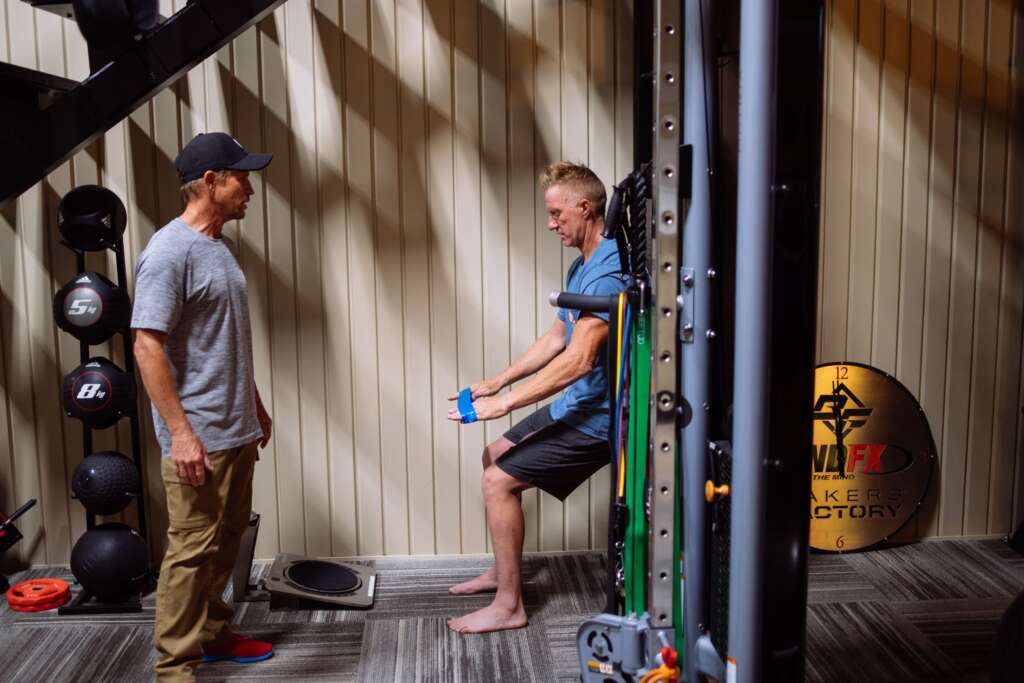
4. Add one external commitment
When left entirely to yourself, training is easy to postpone—especially when goals seem distant.
Add one small stake:
- Meet someone to train
- Don’t eat lunch or dinner until you train
- Tell one person when you’re going
- No screens (TV/social) until the session is done
This doesn’t have to be dramatic. It just needs to make skipping slightly uncomfortable.
What to Stop Doing
When consistency is fragile, these things make it worse:
- Rebuilding your plan every week
- Waiting for sessions to feel “worth it”
- Chasing motivation before starting
- Expecting winter training to feel exciting
Right now, training doesn’t need to be impressive. It needs to be repeatable.
The Point
This phase isn’t about peak fitness. It’s about protecting momentum when structure and short-term goals are missing.
If you can fix start times, shrink sessions, remove decisions, and add a little accountability, consistency usually returns on its own.
Once consistency is restored, everything else becomes easier.
If this feels familiar and you want help applying it to your training, email me at seiji@coachseiji.com.
