

Introduction
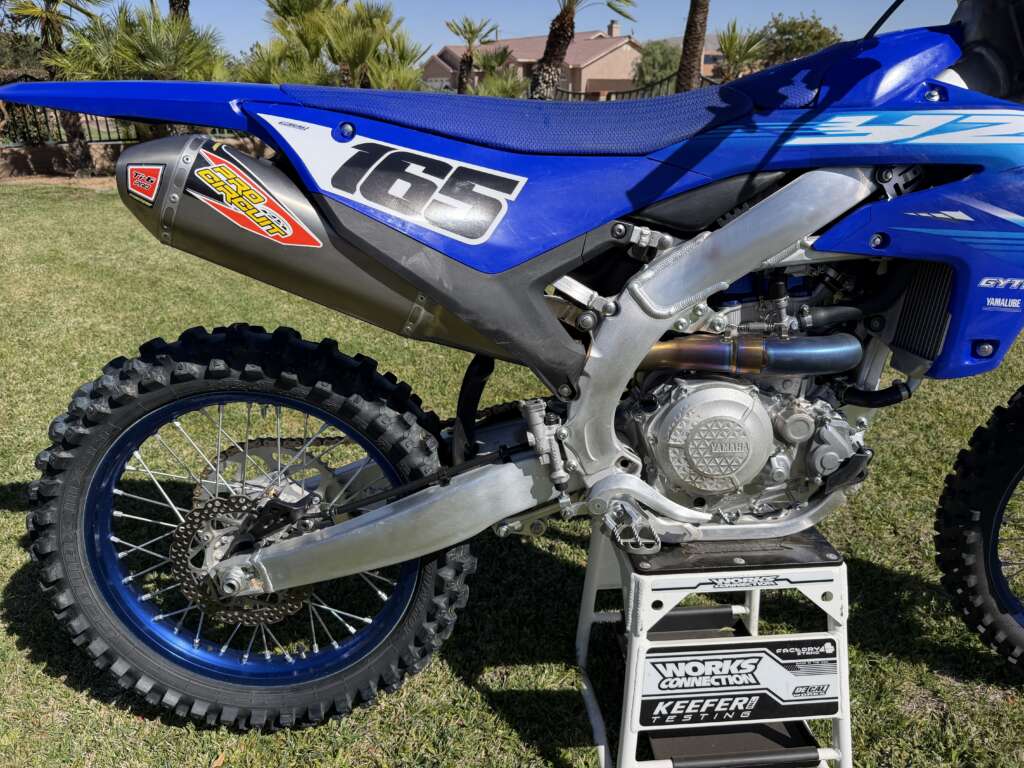
The Yamaha YZ450F doesn’t need a bunch more horsepower. If you’ve spent any amount of time on a modern 450, you know that having more power isn’t always the answer. What I want out of an aftermarket exhaust is better throttle-to-rear-wheel connection, a broader pull through the gears, and an engine character that lets me open the throttle earlier without having to fight the bike. That’s exactly why I was interested in testing the Pro Circuit Ti-6 BC Pro on the 2027 YZ450F (fits 2026/2027 models). The BC stands for Big Canister, and while the larger muffler is aimed at keeping sound in check, the real story for me was how it changed the way the Yamaha put power to the ground.
What’s Different About the BC Pro?
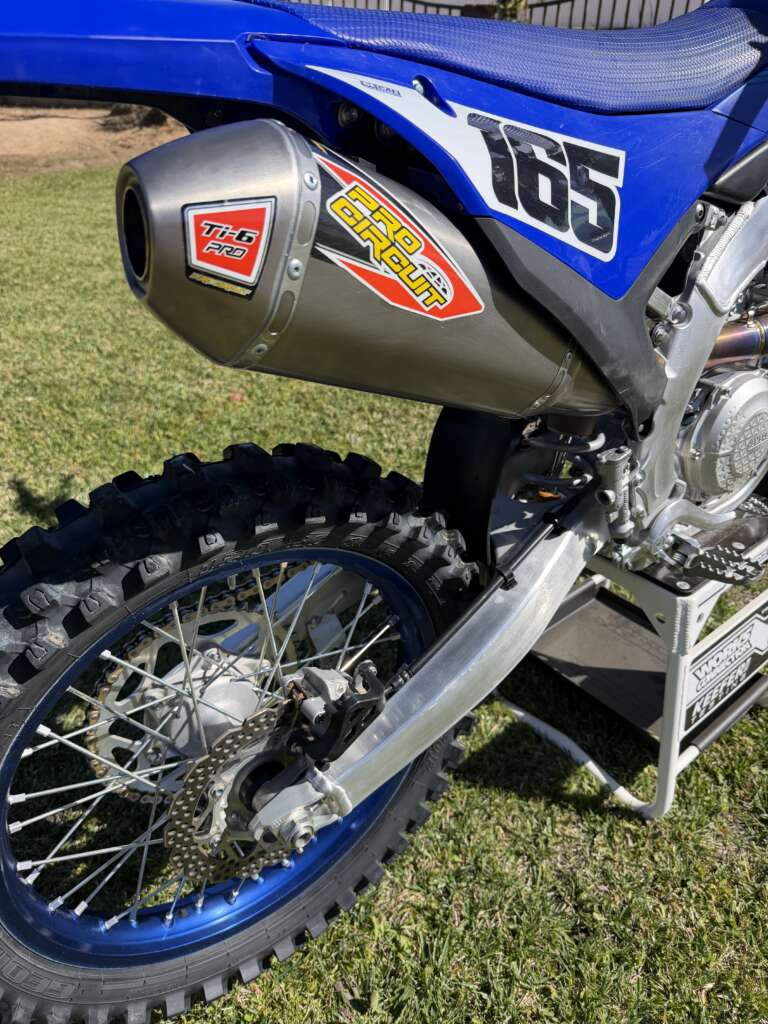
The BC Pro uses a larger canister than the standard Ti-6 design, with the goal of controlling noise while retaining race-level performance. It has a purposeful factory-race look, but I don’t judge an exhaust by how cool it looks on the stand. I care about what happens when I get into a rut, start picking up the throttle, and ask the rear tire to hook up. The Yamaha is already a strong motorcycle, so my baseline for this test was simple: does the BC make that power easier to use than the stock muffler?
Bottom End: Better Connection at Small Throttle Openings
The biggest difference I noticed was right off the bottom. The BC Pro gives the Yamaha a smoother roll-on delivery than stock, but don’t confuse smoother with disconnected or lazy. In fact, the opposite is true. Between roughly 5 and 15 percent throttle opening, the BC feels more connected to the rear wheel than the stock muffler. That’s a critical range on a 450 because it’s where you’re feeding power into the tire while the bike is still leaned over. The stock setup is good, but the BC gives me a clearer sense of what the rear tire is doing. I can crack the throttle without that little question mark about whether the rear end is going to step out. It’s a subtle change on paper, but a noticeable one on the track.
Midrange: More Second-Gear Pull
The BC also changes the character of the midrange in a useful way. Second gear has a longer pulling sensation than it does with the stock muffler, so I don’t feel like I need to rush into the next gear as quickly. That makes a difference when you’re exiting a corner and trying to carry momentum through the next section. Third-gear power feels just as good as stock, which is important because I don’t want to gain something in second only to give it back once I shift. This isn’t about a sudden hit or a dramatic burst of horsepower. It’s about a usable spread of power that works with the Yamaha instead of making it feel more demanding.
Top End and Over-Rev
Up top, the BC Pro doesn’t reinvent the Yamaha. Top-end power is every bit as usable as the stock muffler, and over-rev feels the same as stock. I didn’t come away thinking I had discovered a bunch of extra RPM, and that’s fine with me. On a YZ450F, I would rather have better control and connection where I spend most of my lap than chase an advantage way up in the rev range. The fact that the BC keeps the stock bike’s useful top-end character while improving the lower part of the power is a win in my book.
On-Track Feel: A More Planted Rear End
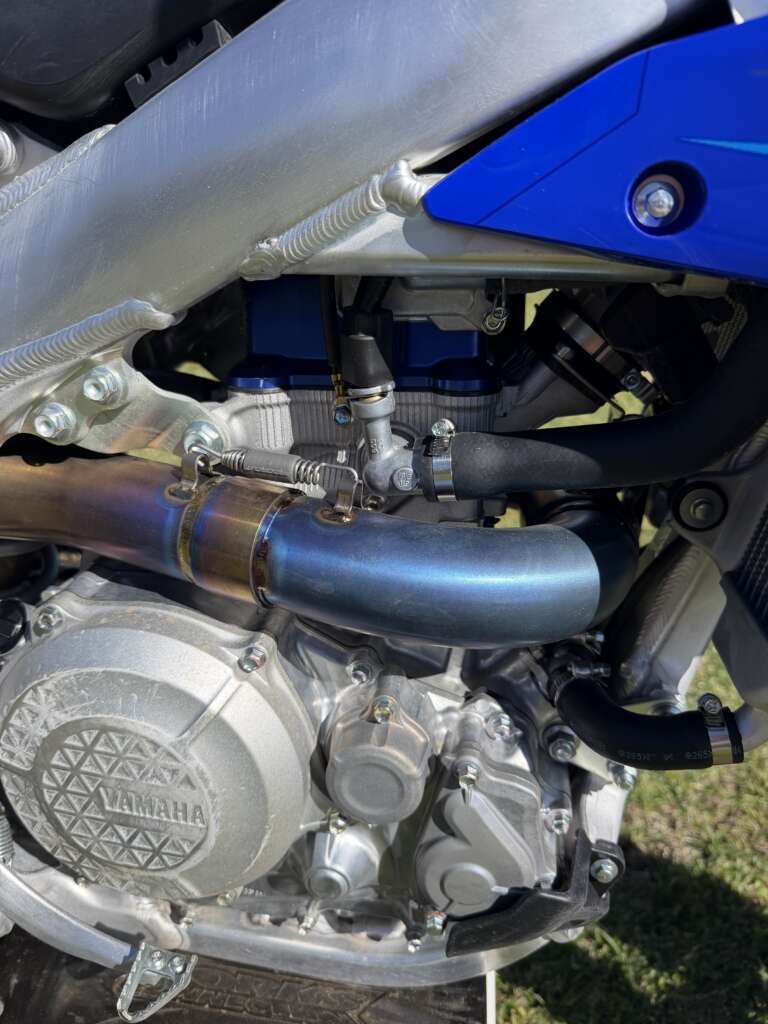
This is where the BC Pro really sold me. The improved connection let me get on the throttle sooner in corners. I wasn’t waiting as long for the bike to straighten up before asking for drive. The Yamaha also felt more planted in the rear, especially during the transition from coasting or maintenance throttle to accelerating out of the turn. I’m not saying a muffler magically changes the suspension or chassis geometry. What it does change is the way the engine feeds torque into the rear tire, and that can absolutely change how settled a bike feels. With the BC, I had more control over that initial drive, and the rear of the YZ450F felt like it was working with me. For riders who sometimes find a 450 to be a handful, this is the kind of change that matters more than a peak-horsepower number.
Sound: Quiet, But Still Racey
The other pleasant surprise was the sound. The BC is quiet compared with what you might expect from a race-oriented exhaust, but it doesn’t sound dull. As the engine climbs toward the upper revs, it still has a racey note. That’s a nice balance. I don’t need a bike to be obnoxiously loud to feel fast, and I like being able to hear the motor work without having it bark at me every time I roll into the throttle. The BC manages to sound serious when you’re riding it hard without making noise the main event.
Final Verdict
The Pro Circuit Ti-6 BC Pro is one of those parts that makes more sense after you ride it than when you just read a spec sheet. I didn’t find some huge top-end gain or a wild new hit. What I found was a smoother roll-on, more connection between 5 and 15 percent throttle, a longer second-gear pull, and the same useful third-gear, top-end and over-rev performance I get from stock. Most importantly, it helped me open the throttle sooner and made the rear of the Yamaha feel more planted. That’s a meaningful improvement on a 450. If your goal is simply to make the YZ450F louder, this isn’t the point of the BC. If your goal is to make the power you already have easier to use, the BC Pro deserves a serious look.
