

Written By: Seiji Ishii
I have tiny knees and ankles, bigger thighs and calves than my joints suggest, and enough tibial torsion (bowleggedness) that a lot of knee braces fight my legs before I even get on the bike. The Leatt X-Frame braces are the best-fitting off-the-shelf knee braces I’ve worn in the last decade.
I’ve also had multiple procedures on one knee, so I am not casual about knee protection. If a brace does not fit well, stay put, and feel protective without distracting me, I am not going to keep wearing it.
A spec list for knee braces can’t tell you all you need to know. Weight matters. Hinge design matters. Frame stiffness matters. Patella protection matters. But none of that helps if the brace constantly slides down, creates hot spots, or feels like it was designed around a leg shape you don’t have.
That has been my issue with a lot of knee braces. I am 5’11” and 168 pounds, but my joints are small. My knees and ankles are narrow, while my thighs and calves are relatively large for that joint size. Add in a high amount of tibial torsion, and fit gets difficult quickly. Over the last decade, I’ve tried four different knee braces, including custom CTi braces, and the Leatt X-Frame has fit me better than anything else I’ve used.
That surprised me. I don’t expect an off-the-shelf brace to fit better than something custom-made, but that’s been my experience. After roughly 10 hours of riding in them, these are the braces I grab the most often because once I’m riding, I mostly forget about them.
Fit Is the Story
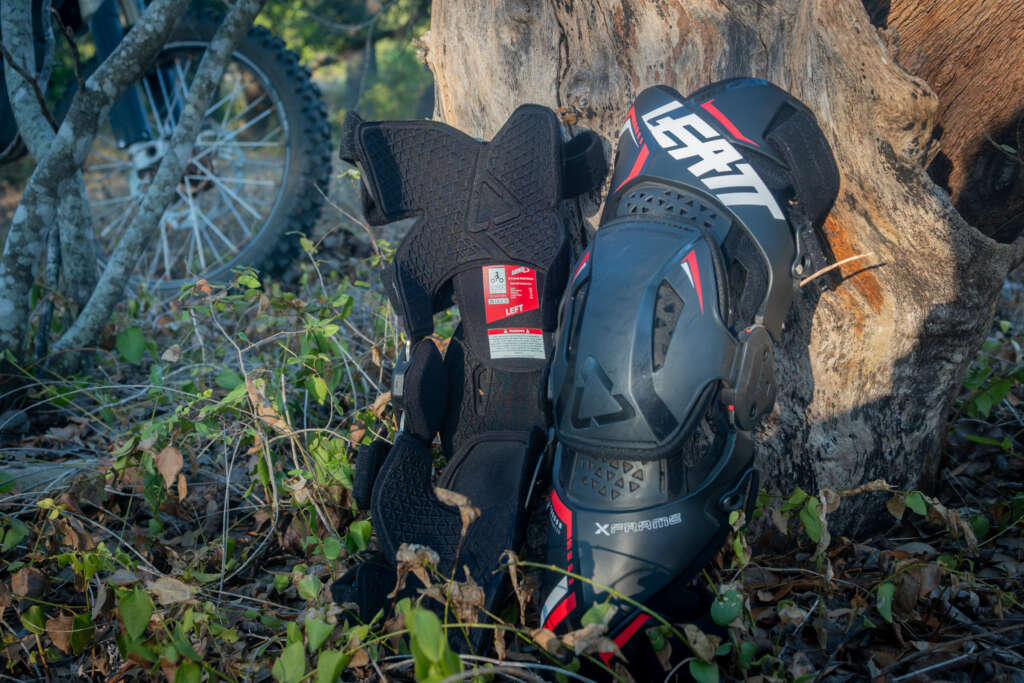
Leatt describes the X-Frame as its premium dual-hinged knee brace. The injection-molded carbon composite frame houses asymmetrical hinges, a metal-geared outer hinge for smooth movement and durability, and a minimalist inner hinge for better bike feel. That all sounds great, but this brace worked for me for a much simpler reason: the taper matched my leg shape better than anything else I’ve tried.
I wore a size large. My verified weight for the pair was 3 pounds, 1 ounce. The size large brace measured 18 inches long, compared with 15 inches for my POD braces. That is a noticeable difference, and it helps explain some of the X-Frame’s feel. These braces reach farther up the femur and farther down the tibia than some shorter designs.
The X-Frame isn’t ultralight, but weight on a scale and perceived weight aren’t always the same thing. They felt lighter while riding than some braces I’ve owned that were lighter on the scale because they didn’t move around. Knee braces that slip down or rotate constantly remind you they are there. These braces didn’t.
These stayed put better than any knee brace I’ve used.
That alone is a big deal for me. With most braces, I have to pull the straps tighter than I want just to keep them from migrating down my legs. Then I end up feeling like I am compressing muscle instead of securing protection. With the X-Frame, I eventually learned I did not have to run the straps nearly as tight. The braces stayed in place without feeling like they were cutting into my legs.
The Padding Helps More Than I Expected
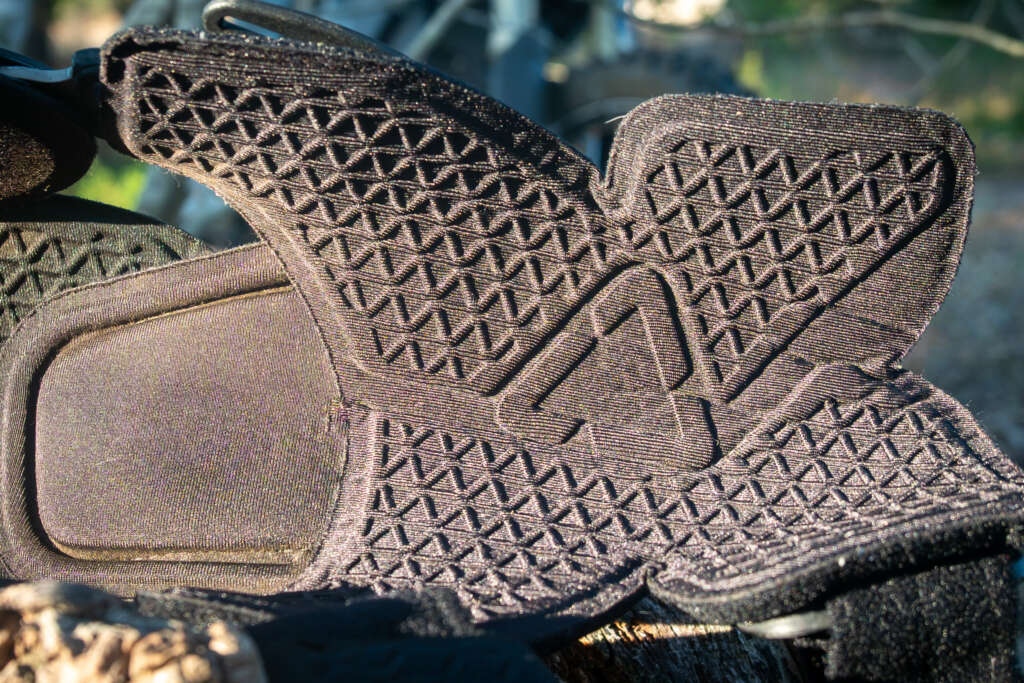
I wore the X-Frames with Fly Racing knee brace socks. The padding on the braces is not as dense as what I’ve seen on some other braces, and at first I wondered if I would want more. I never did.
The backside of the padding is embossed and grippy, and Leatt uses similar grippy material on two of the four straps. That combination made a bigger difference than I expected. The brace didn’t need to be over-tightened to stay in position, which made the setup feel less intrusive.
This is one of those things that sounds minor until you live with the product. A knee brace can have a great frame and strong hinges, but if it slowly walks down your leg during a moto, you become constantly aware of it. The X-Frame did not do that to me.
Long Brace, Big Leverage
The X-Frame is a long brace. That length is part of why it feels so stable, but it is also something riders should pay attention to.
If you do not like the feeling of a brace putting leverage across your long bones, this may not be the brace for you. Some riders are sensitive to that, especially if they prefer shorter, lower-profile protection. I noticed the length, but it did not bother me. For my build, it seemed to help the brace stay planted and distribute load well.
That may be one reason it worked so well with my leg shape. The brace had enough structure above and below the knee to grab the bigger parts of my leg.
I also had no boot-interference issues while wearing them with Leatt 5.5 FlexLock boots. The lower section fit cleanly into the boot area and never felt like it was fighting the top of the boot.
Hinge and Bike Feel
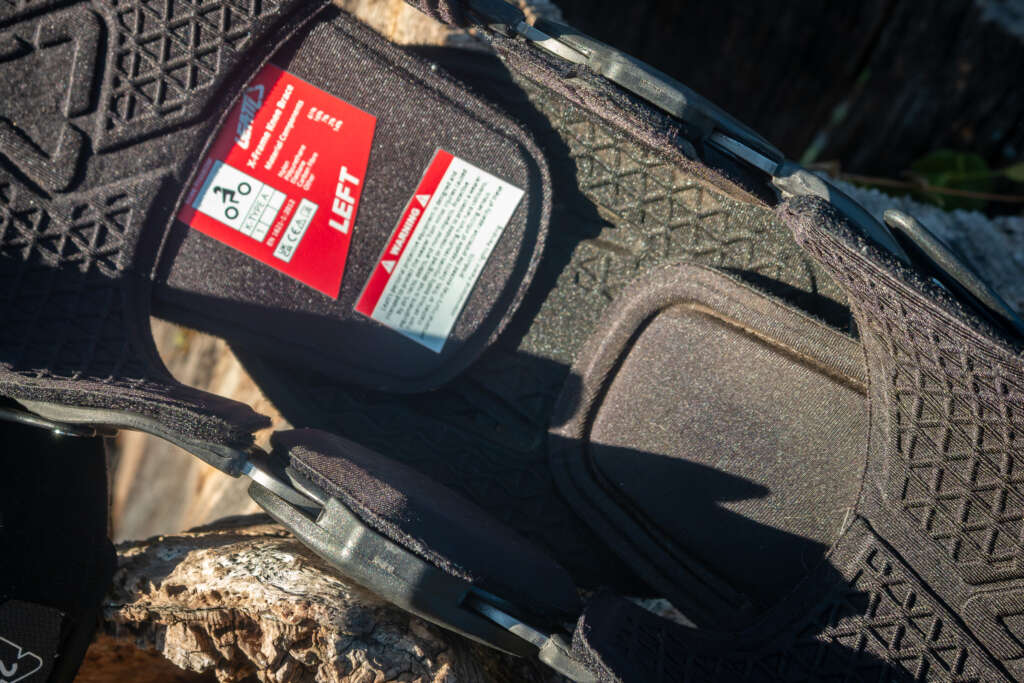
The dual-axis hinge action felt natural and frictionless. I never felt like the brace was forcing my knee through an odd path, and the extension limiters were easy to install. I used the 5-degree limiter, which still allowed me to get to a perfectly stacked, straight knee joint if I forced it. For me, that was the right balance between having a stop in place and not feeling like the brace was interrupting normal movement.
The inner hinge is also very low-profile, which I appreciated when sitting and squeezing the bike. Some brace hinges irritate the inside of my narrow, bony knees. The X-Frame didn’t give me those hot spots, and I never felt like the brace interfered with bike feel.
That is one place the X-Frame stood out from my CTi Customs. The CTis are extremely rigid and protective-feeling, but that rigidity made them feel less connected to the bike. I felt well protected, but I also felt the brace more than I felt the motorcycle. The X-Frame frame is very rigid in the hands—second only to CTi for torsional and lateral rigidity—but it did not bother me the same way while riding.
Protection and Frame Stiffness
Leatt says the X-Frame is designed to reduce forces related to ACL, meniscus, and MCL injuries, and the brace is listed as a certified medical device in both the EU and USA. It is also CE tested and certified for knee impact protection under EN1621-1 Level 1.
I can’t validate Leatt’s injury-reduction claims based on my riding experience. What I can say is that the frames feel very rigid in hand, and the patella cup design gave me confidence. I appreciated that the kneecap protection has a rigid standoff, and through several minor get-offs where I landed on a knee, I never felt impact come through my kneecap in a way that concerned me. The braces also never rotated or moved out of alignment.
The front of the braces also has very little open area, which is similar to some of my other braces. I thought that might make them feel hot in the brutal Texas heat. They did not feel hotter than my other full-coverage braces. The only braces I own that feel noticeably cooler are my PODs, and those are three inches shorter overall.
Who They May Not Work For
I would not call the X-Frame a universal fit.
If you have very large knees relative to your thighs and calves, the taper that worked so well for me may not work the same way for you. If you hate long braces or do not like feeling structure far up your femur and down the tibia, this may also be too much brace. And if you want the shortest, coolest, least noticeable brace possible, this probably isn’t it.
You may also not like these braces if you prefer frames with more give. My carbon PODs are noticeably more flexible in every direction, which helps with riding comfort and bike feel, but they don’t fit me as well as the Leatts. The X-Frames give up some of that flex and sensitivity, but the better fit made the stiffness easier to live with. I also felt more protected because of that rigidity.
But for my small joints, larger thighs and calves, narrow knees, and bowlegged alignment, the shape was unusually good. That is not a small thing. Fit is the difference between a brace you tolerate and a brace you consistently choose.
Final Thoughts
The Leatt X-Frame is the best-fitting knee brace I’ve tried in the last decade.
That is not because it is the lightest brace I own. It is not because it is custom. It is not because it looks the most high-tech. It is because once I put it on and started riding, I stopped thinking about it. For knee braces, that is about as good as it gets.
The Leatt X-Frame knee braces stayed in place without choking my legs. The hinges felt natural. The inner hinge did not create hot spots. The frame felt rigid without feeling harsh. The patella protection gave me confidence in minor crashes, and the braces worked unusually well with a leg shape that has made other braces difficult to fit.
I still find it hard to believe an off-the-shelf brace fits me better than my custom CTis, but that is the truth of my experience. When I am choosing knee braces to ride in right now, these are the ones I grab most often.
For riders with a similar build—small knees and ankles, larger thighs and calves, or trouble keeping braces from sliding down—the Leatt X-Frame should absolutely be on the short list.
Disclosure: The Leatt X-Frame braces were provided for review. That does not affect my conclusions. If they didn’t work for me, I would say so.
