

By Seiji Ishii
Ken Roczen admitting he battles severe anxiety may have helped more riders than his winning the championship.
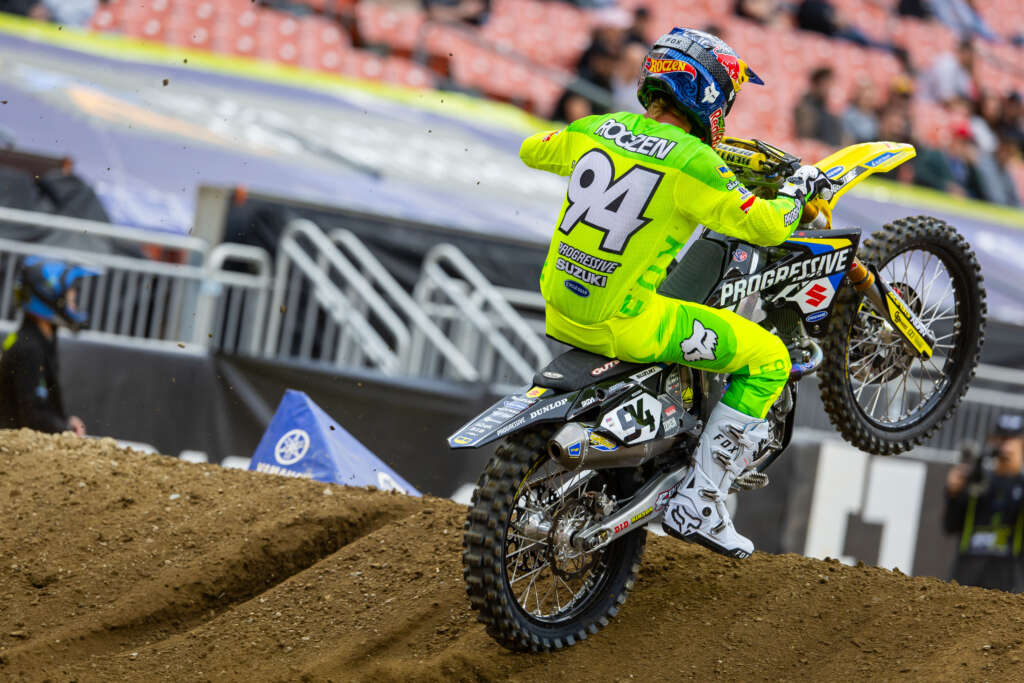
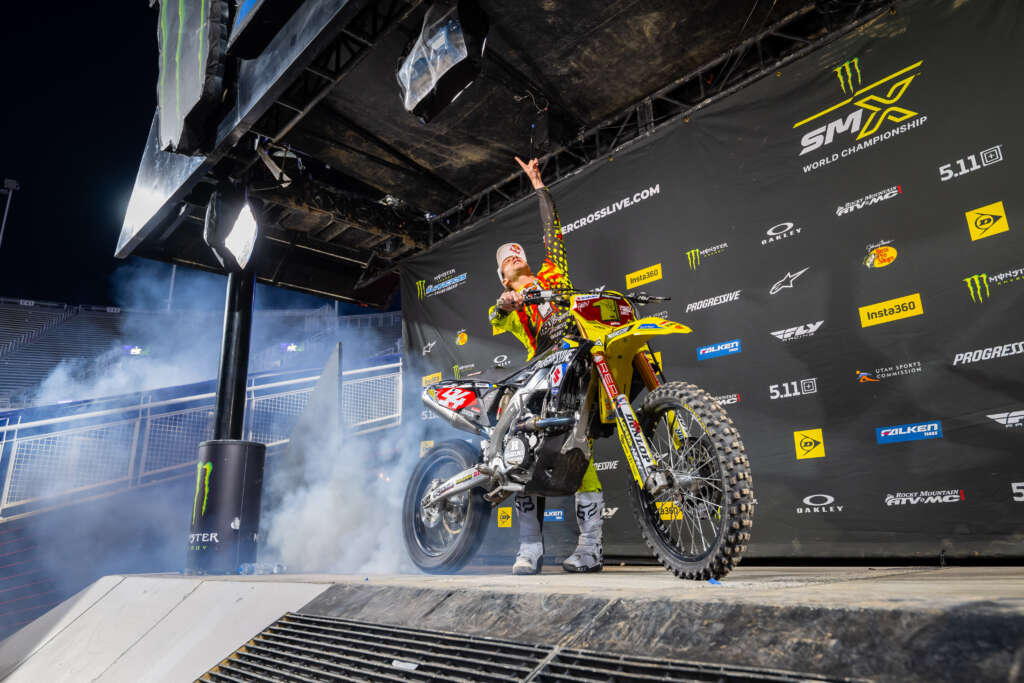
Fresh off winning his first AMA Supercross Championship, Ken Roczen stood on stage emotionally drained. Not hyped up. Not pretending to be untouchable. Not giving a polished speech about confidence and momentum. He looked exhausted, and honestly, that’s part of why the moment mattered.
Roczen openly talked about the anxiety he dealt with leading into the final rounds of the championship. He described his brain trying to “manipulate” him. He talked about strange emotions robbing his energy. He admitted that the final stretch of the season had taken a major toll on him mentally and emotionally. Then he said something that probably landed hard for a lot of people listening:
“You’re not alone.”
That’s a meaningful thing for someone at that level to say publicly, especially in a sport where riders still feel pressure to project toughness all the time.
Moto Still Romanticizes the “Fearless” Athlete
There’s still a tendency in moto to treat elite athletes like they eventually evolve past normal human emotions. Fear, anxiety, self-doubt, pressure—those are often viewed as things that happen to amateurs or weaker competitors, not champions. Steve Magness talks a lot about this in his work around performance and what he calls “the myth of greatness.” People imagine elite performers as mentally invincible, as if becoming great means becoming emotionally untouched.
Spend enough time around high performers in any sport, and you realize that it isn’t reality. Many of them are dealing with the same internal battles everyone else experiences. Pressure. Self-doubt. Anxiety. Fear of failure. Emotional swings. The difference often lies in their ability to continue functioning while carrying those feelings, rather than interpreting them as proof that something is wrong.
That’s very different than never feeling them in the first place.
The Feeling Isn’t Automatically the Problem
One thing that shows up with younger or less experienced riders is the belief that anxiety itself means they aren’t ready. The second nerves appear, the interpretation becomes:
“Maybe I don’t belong here.”
“Maybe I’m not prepared.”
“Maybe confident riders don’t feel like this.”
Roczen’s comments pushed directly against that idea in a healthy way. He wasn’t saying he figured out how to remove pressure completely. He was saying his brain fights him too, and he keeps going anyway. That’s a much more useful message because anxiety and performance are not mutually exclusive. A rider can feel nervous and still execute well. A rider can feel pressure and still perform at a high level. A rider can carry doubt in the background and still line up ready to race.
A lot of elite performance probably looks more like managing internal chaos than eliminating it.
Pressure Usually Means You Care
Pressure is often tied to investment. If a race matters deeply to you, your nervous system is probably going to react. That doesn’t automatically mean something is broken mentally. Sometimes it simply means the outcome matters.
The goal isn’t becoming emotionless. The goal is to build enough perspective and emotional control so that feelings stop dictating every decision. Once emotions start acting like commands instead of information, performance usually gets messy fast. Riders tighten up. They overreact. They search for certainty that doesn’t exist in racing anyway.
That’s where people start spiraling.
Social Media Distorts This Even More
Social media probably makes this worse because everybody mostly sees polished versions of other athletes. Riding clips. Podium photos. Gym edits. Recovery routines. Motivational captions. Very little of the ugly part makes it online. The sleepless nights, the panic, the emotional fatigue, the self-doubt before major races—most of that stays hidden.
That creates a distorted picture where everyone else appears composed while your own struggles feel abnormal. In reality, many athletes quietly carry far more mental noise than people realize.
Roczen admitting it publicly chipped away at that illusion a little bit.
Roczen Didn’t Look Weak
Roczen didn’t look weak when saying it. If anything, he looked more believable because he stopped pretending elite athletes are somehow emotionally untouched by pressure. That matters, especially in a sport where toughness is sometimes confused with acting like nothing affects you.
Some of the mentally strongest athletes are not the ones who feel nothing. They’re the ones who can continue functioning at a high level while carrying difficult emotions in the background. That’s a completely different skill set than simply pretending fear or anxiety never exists.
Confidence Usually Follows Action
A lot of people wait around hoping confidence arrives first. In reality, durable confidence usually gets built afterward. You train while uncertain. You race while nervous. You execute while carrying doubt. Over time, your brain slowly collects evidence that you can still function under pressure.
That process creates a much more stable kind of confidence than trying to manufacture motivation or hype before every event. Waiting to feel perfectly calm before performing usually turns into a losing game because racing rarely gives anyone perfect emotional conditions.
The Real Takeaway
The important part of Roczen’s speech wasn’t simply that an elite athlete experiences anxiety. Most people probably suspect that already on some level. The important part was hearing one of the best riders in the world openly say those emotions didn’t disqualify him from greatness.
That’s a message a lot of younger riders probably needed to hear.
There’s still this lingering belief in sports that struggling internally means you aren’t mentally strong enough to succeed. In reality, many elite performers carry the same emotions as everyone else. The difference often lies in their ability to continue moving forward while those emotions are still present.
The goal isn’t becoming fearless. The goal is to reduce the extent to which fear controls your decisions. The goal isn’t eliminating anxiety. The goal is to realize that anxiety and high performance can exist at the same time.
That’s the part people miss when they think about greatness.
